
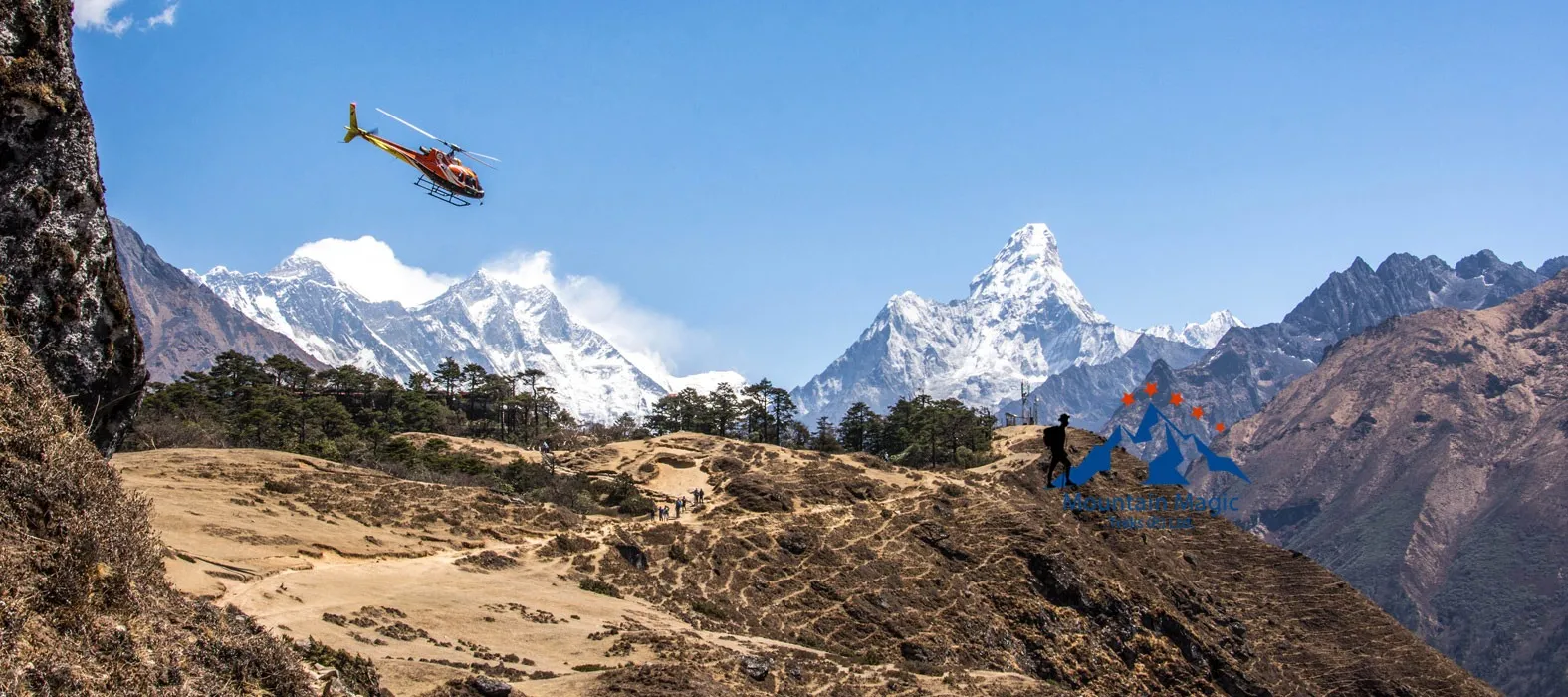
Colorful prayer flags are a familiar sight throughout the Everest region. They hang above mountain trails, cross suspension bridges, decorate village entrances, and appear near monasteries and high mountain viewpoints. Their presence adds a distinctive cultural feature to the landscape of the Khumbu.
These flags are connected to Tibetan Buddhist traditions and are used as symbols of prayers, blessings, and goodwill. During the Everest Base Camp Trek with Helicopter Return, travelers may see them in several settlements and along different sections of the route. Understanding their meaning helps visitors appreciate these cultural features instead of treating them as ordinary decorations.
What Are Himalayan Prayer Flags?
Prayer flags are pieces of colored fabric printed with traditional Buddhist prayers, symbols, and sacred designs. They are commonly attached to ropes and placed outdoors, where wind can move the fabric.
In the Everest region, prayer flags are closely connected to the Buddhist beliefs and traditions followed by many local communities.
Why Prayer Flags Are Placed Outdoors
The movement of the flags in the wind has religious meaning. In Tibetan Buddhist tradition, the wind is believed to carry the blessings and positive intentions represented by the printed prayers.
They are not simply used to decorate buildings or mountain paths. Their placement can reflect religious devotion, remembrance, and wishes for peace and well-being.
Understanding the Five Traditional Colors
Many prayer flags use five colors: blue, white, red, green, and yellow. These colors are traditionally associated with the five elements in Tibetan Buddhist symbolism.
What Each Color Represents
| Color | Traditional association |
| Blue | Sky or space |
| White | Air or wind |
| Red | Fire |
| Green | Water |
| Yellow | Earth |
The colors are often arranged in a particular sequence, although the layout can vary.
Their symbolic meaning is connected to ideas of balance, harmony, and the natural world. Visitors should understand that these associations come from a religious tradition rather than from a general rule about mountain decoration.
Prayer Flags Around Namche Bazaar
Namche Bazaar is an important settlement in the Khumbu region. It has homes, shops, teahouses, monasteries, and other community spaces where Buddhist cultural practices are visible.
Prayer flags may be seen around religious sites and along parts of the village landscape.
Their Place in Everyday Community Life
For many local residents, prayer flags are part of a wider religious environment that includes prayer wheels, monasteries, stupas, and mani walls.
These features are connected to Buddhist practice and are often found near walking routes and community gathering places.
The Everest Base Camp Trek with Helicopter Return includes a stop in Namche Bazaar, giving travelers an opportunity to see these cultural features within a working mountain settlement.
Prayer Flags Along Mountain Passes and High Viewpoints
Prayer flags are also placed in exposed mountain locations, including viewpoints and passes.
Their bright colors stand out against rocky slopes, snow-covered peaks, and open skies. Some locations have large groups of flags connected between rocks or poles.
Why These Locations Are Significant
High viewpoints and mountain passes can hold religious or cultural importance for local communities. Placing prayer flags in these areas may express prayers for safe journeys, peace, and good fortune.
Travelers may notice them around prominent viewpoints on the route, including areas near Kala Patthar.
However, not every group of flags has the same history or purpose. Their meaning may depend on the person or community responsible for placing them.
What Is Printed on Prayer Flags?
Traditional prayer flags often contain more than just colored fabric. They may include religious text, sacred symbols, and images associated with Buddhist teachings.
Common Printed Features
Depending on the design, visitors may notice:
- Traditional Buddhist prayers.
- Sacred syllables or mantras.
- Images of protective figures.
- Symbols associated with good fortune.
- Designs representing harmony and compassion.
One commonly seen figure is the Wind Horse, known as Lungta in Tibetan. It is associated with the carrying of good fortune and positive energy.
The designs are meaningful within their religious context, so they should not be treated as random artwork or souvenirs.
Why Prayer Flags Change Color Over Time
Prayer flags are exposed to strong sunlight, wind, rain, snow, and cold temperatures. These conditions gradually affect the fabric and printed designs.
Natural Wear in the Mountain Environment
Over time, the colors may fade, the edges may become damaged, and the fabric may eventually tear.
This aging process is a normal part of outdoor exposure. However, visitors should not assume that they can remove or replace old flags themselves.
Local religious customs and community practices guide how prayer flags are handled, replaced, and disposed of.
Respectful Behavior Around Prayer Flags
Prayer flags are religious objects, not ordinary decorations. Visitors should be careful when walking near them or taking photographs.
Simple Rules for Trekkers
- Do not pull down or tear prayer flags.
- Avoid stepping over ropes placed at religious sites.
- Do not write on or mark the fabric.
- Ask permission before handling flags.
- Avoid placing rubbish near religious structures.
- Follow local instructions when visiting monasteries or sacred areas.
If a guide explains the meaning of a particular flag installation, listen before taking photographs or moving closer.
The Everest Base Camp Trek with Helicopter Return passes through several culturally important settlements. Respectful behavior helps protect the traditions that make these places meaningful to local residents.
Prayer Flags as Part of the Khumbu Landscape
The mountain environment of the Everest region includes glaciers, rocky ridges, forests, villages, and high-altitude viewpoints. Prayer flags form a cultural part of this landscape.
Their colors create a strong contrast with the natural surroundings, but their importance goes beyond appearance.
For local communities, they can represent faith, compassion, prayers, and wishes for the well-being of others. For visitors, they offer an opportunity to understand an important part of the region’s Buddhist heritage.
The Everest Base Camp Trek with Helicopter Return connects travelers with these cultural details while following the route through Lukla, Namche Bazaar, Tengboche, Dingboche, and Gorakshep.
Final Thoughts
Prayer flags are among the most recognizable cultural features of the Everest region. Their five colors, printed prayers, and placement in mountain locations reflect Buddhist traditions that remain important to many communities in the Khumbu.
During the Everest Base Camp Trek with Helicopter Return, travelers can see these flags near villages, religious sites, bridges, and high viewpoints. Understanding their meaning encourages a more respectful visit and gives greater context to the cultural landscape surrounding the trail.
Frequently Asked Questions
1. What do Himalayan prayer flags represent?
They represent prayers, blessings, compassion, and wishes for peace and well-being within Tibetan Buddhist traditions.
2. What are the five colors of Buddhist prayer flags?
The five traditional colors are blue, white, red, green, and yellow. They are associated with sky or space, air or wind, fire, water, and earth.
3. Why are prayer flags placed on mountain passes?
They may be placed at important locations to express prayers, blessings, and wishes for safe journeys and good fortune.
4. What is Lungta on a prayer flag?
Lungta, often translated as Wind Horse, is a traditional Tibetan Buddhist symbol associated with good fortune and the spreading of positive energy.
5. Can trekkers take photographs of prayer flags?
Yes. Travelers can generally photograph visible prayer flags, but they should avoid touching, moving, or damaging them and respect any local restrictions.